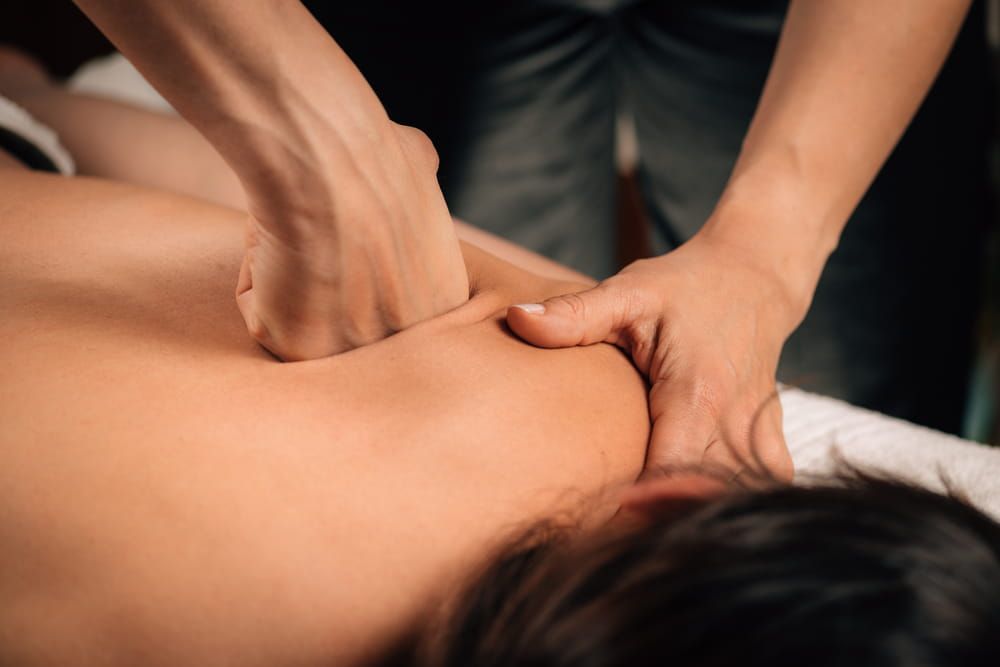
How It Specifically Helps the Upper Back and Shoulders
This is more targeted than general body work. Your therapist works directly on the exact muscles causing your pain. Deep tissue massage for shoulder pain and back pain focuses on the muscle groups that take the most strain from daily life.
- Releases tight trapezius muscles and shoulder blade attachments that cause that locked-up feeling
- Improves shoulder mobility and reduces forward-rounded posture patterns
- Eases tension that contributes to neck stiffness and tension headaches
Techniques like trigger point therapy and myofascial release help break down knots and adhesions where the tension actually lives. The result is targeted relief that addresses the cause of your pain.
How Many Sessions Do You Actually Need
It depends on how long the tension has been building. One session can bring noticeable relief, but lasting results often come from a consistent rhythm.
- One session works well for mild or recent tension
- Three to four sessions over a few weeks is better for pain that keeps coming back
- Monthly sessions help people who sit for long hours keep tension from building back up
For chronic pain, more frequent visits in the beginning help break the cycle of tension. Once your muscles start to release, you can space sessions further apart for maintenance.
Simple Things to Do Between Sessions
Massage works better when supported by small daily habits. Deep tissue massage for back painand shoulder pain delivers stronger results when paired with simple changes at home or work.
- Take short movement breaks every 30 to 60 minutes if you sit at a desk
- Use a heat pack on the shoulders or upper back after long or demanding days
- Adjust your screen height and sitting posture when you notice your shoulders creeping up
These minor adjustments won’t substitute for the profound work your therapist provides, but they will prevent your muscles from tensing again between appointments. Lasting change results from a blend of professional care and daily routines.
You Have Carried This Long Enough
Shoulder and back pain that keeps coming back is a sign that the deeper muscles need attention. A qualified therapist who knows where to work and how deep to go makes all the difference. At Refresh Thai Spa in Plano and Richardson, TX, our licensed therapists are trained in both traditional deep tissue techniques and Thai-inspired methods that combine targeted pressure with assisted stretching for results you can feel.
Your shoulders have been carrying enough. Let our therapists do the work.Book your deep tissue massage today and give your body the relief it has been asking for.
References:
Everything You Need to Know About Massage Therapy. Retrieved on 28 April, 2026 from https://health.clevelandclinic.org/benefits-of-massage
Deep Tissue Massage and Nonsteroidal Anti-Inflammatory Drugs for Low Back Pain: A Prospective Randomized Trial. Retrieved on 28 April, 2026 from https://pmc.ncbi.nlm.nih.gov/articles/PMC3953439/
Frequently Asked Questions About Deep Tissue Massage for Shoulder and Back Pain
Q: What is the fastest way to relieve shoulder pain and back pain?
A: The fastest way to relieve shoulder and back pain that keeps coming back is to address the deeper muscle layers where the tension actually lives. Heat, stretching, and rest can help in the short term, but they rarely reach the root of the problem. A targeted deep tissue massage works directly on the tight muscles causing the pain, often delivering noticeable relief in just one session.
Q: How often should I get a massage for back pain and shoulder pain?
A: It depends on how long the tension has been building. For mild or recent tension, one session may be enough. For pain that keeps returning, three to four sessions over a few weeks is usually more effective. Once your muscles start to release, monthly sessions are often enough to maintain results.
Q: Will I feel sore after deep tissue massage therapy?
A: Some people feel mild soreness after a session, especially if it is their first time or if the muscles being worked on are very tight. The soreness usually fades within 24 to 48 hours and is often replaced by a noticeable feeling of looseness and relief. Drinking water and applying gentle heat can help.
Q: How long does relief from a deep tissue massage last?
Relief from a single session can last anywhere from a few days to a few weeks, depending on how tight your muscles were and how much tension you carry day to day. People who book regular sessions often see longer-lasting results because their muscles stay loose between visits.